
Ship log
Kobeissi’s six conditions: why a barbell beats a single ‘correct’ portfolio
Reading the Sep 10 Kobeissi list — $5k checks, $100 oil, $40T debt, sticky inflation, AI, and a Warsh Fed — and how those forces pull different ways. A barbell mental model with sources. Not personalized advice.
The Kobeissi Letter posted on September 10, 2026:
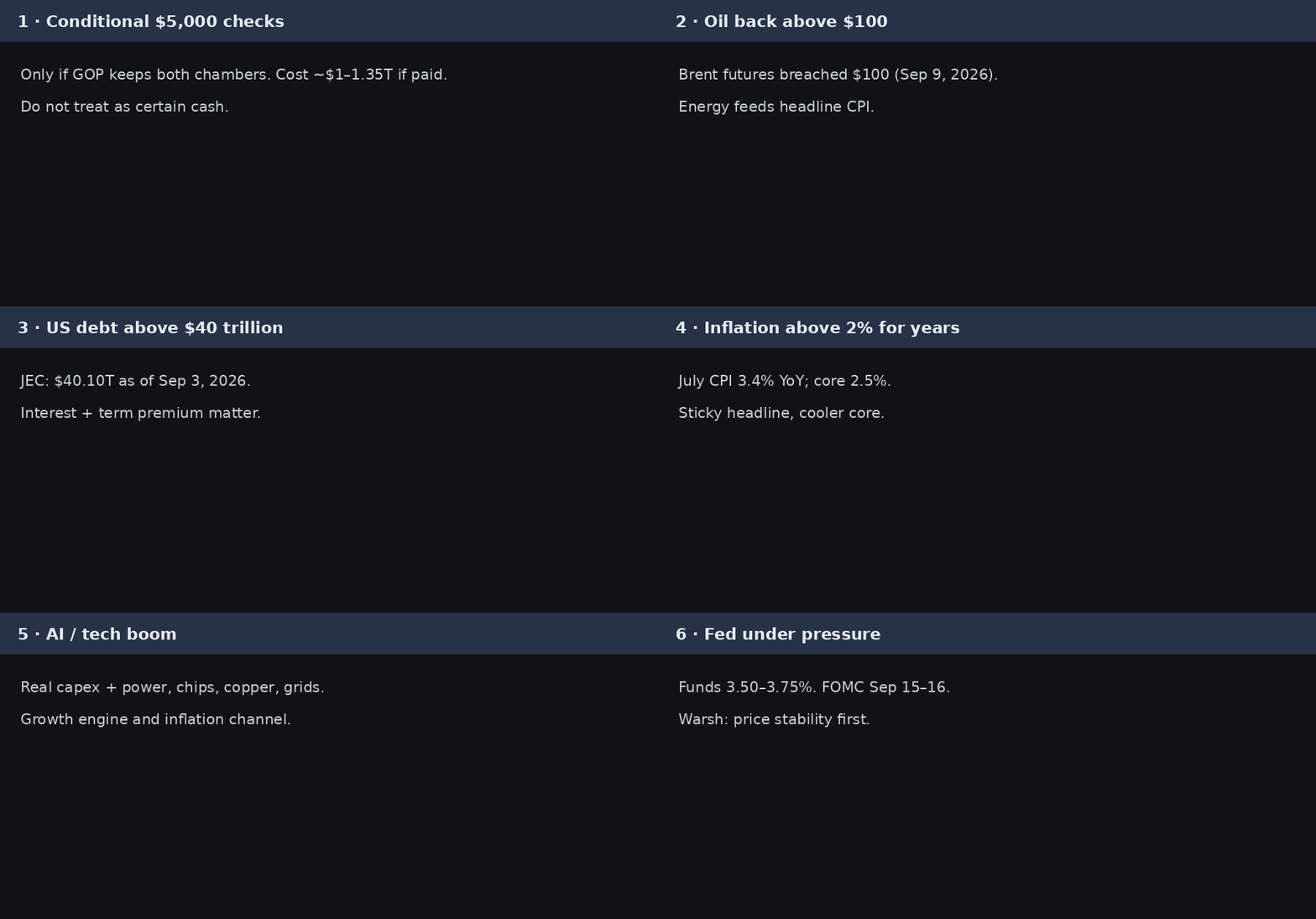
We now have: (1) President Trump offering $5,000 “dividend” checks to all American adults; (2) oil prices officially back above $100 per barrel; (3) total US debt above a record $40 trillion; (4) inflation above 2% for 60 consecutive months; (5) one of the biggest technological revolutions in modern history; (6) the Fed facing pressure to cut rates while inflation remains above target. This is your advance notice to position yourself accordingly.
There is no single “correct” position that falls out of that list. It describes a mix of inflationary fiscal risk, an energy shock, a massive debt load, sticky prices, a genuine productivity boom, and a Fed that is not in an easy easing cycle. Those forces pull in different directions.
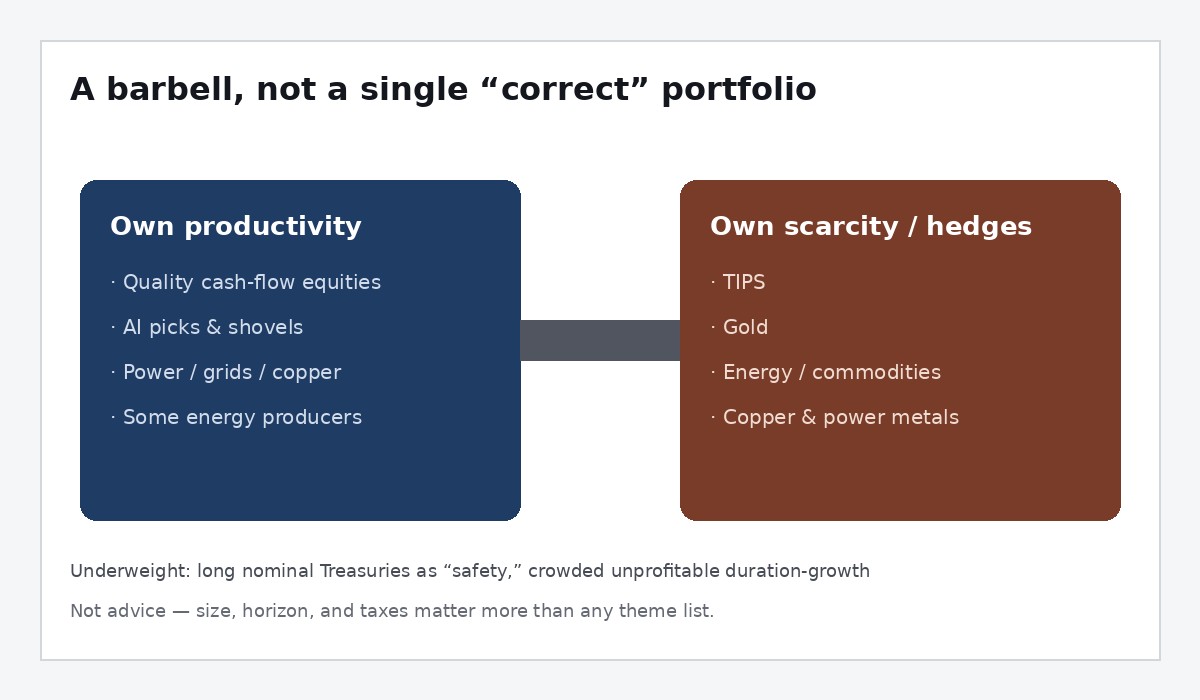
The practical response is usually a barbell: own the growth / AI story while explicitly hedging inflation, energy, and fiscal risk.
This is not personalized advice. Position size, time horizon, and tax situation matter more than any theme list. I’m writing this for physician-builders who keep asking “what does that viral list actually imply?” — with sources you can check, not a ticker sheet.
What the six conditions actually imply
1. Conditional $5,000 checks
Only if Republicans keep both chambers — that’s how the promise has been framed in coverage of the midterm pitch (News9 / AP-style reporting; InvestingLive).
Rough cost if paid to every adult is on the order of ~$1–1.35 trillion, depending on eligibility (AP: “more than $1 trillion”; InvestingLive: ~$1.35T at ~270M adults × $5,000). If it happens it is stimulative and inflationary. Similar cash promises earlier in the term largely did not get paid (analysis of prior dividend/rebate pledges).
Do not treat it as certain cash. Size any “stimulus trade” as a scenario, not a base case.
2. Oil back above $100
Reuters (Sep 9, 2026): Brent crude futures breached $100 for the first time since July 24 as Middle East conflict escalated. Spot commentary around the print put Brent near ~$101.
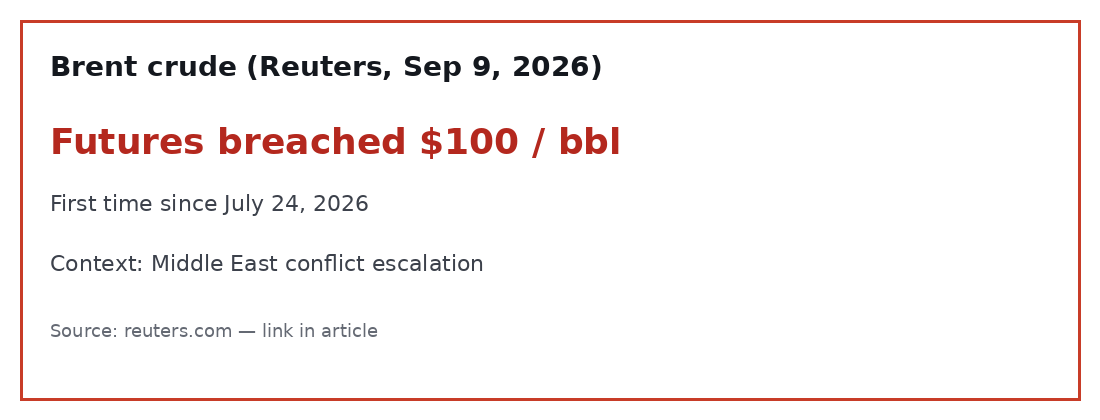
Energy is feeding headline CPI. Diesel and shipping costs move with crude; that shows up in goods prices with a lag. This is why “sticky inflation” in the Kobeissi list is not only a wage story right now — it’s an energy story layered on top of everything else.
3. Debt above $40 trillion
Confirmed. The Joint Economic Committee’s monthly update (Sep 8, 2026) put total gross national debt at $40.10 trillion as of Sep 3, 2026, up $2.67 trillion year over year (JEC Republicans release). Treasury’s public debt series crossed $40T in the same week (WSJ via archive.ph).
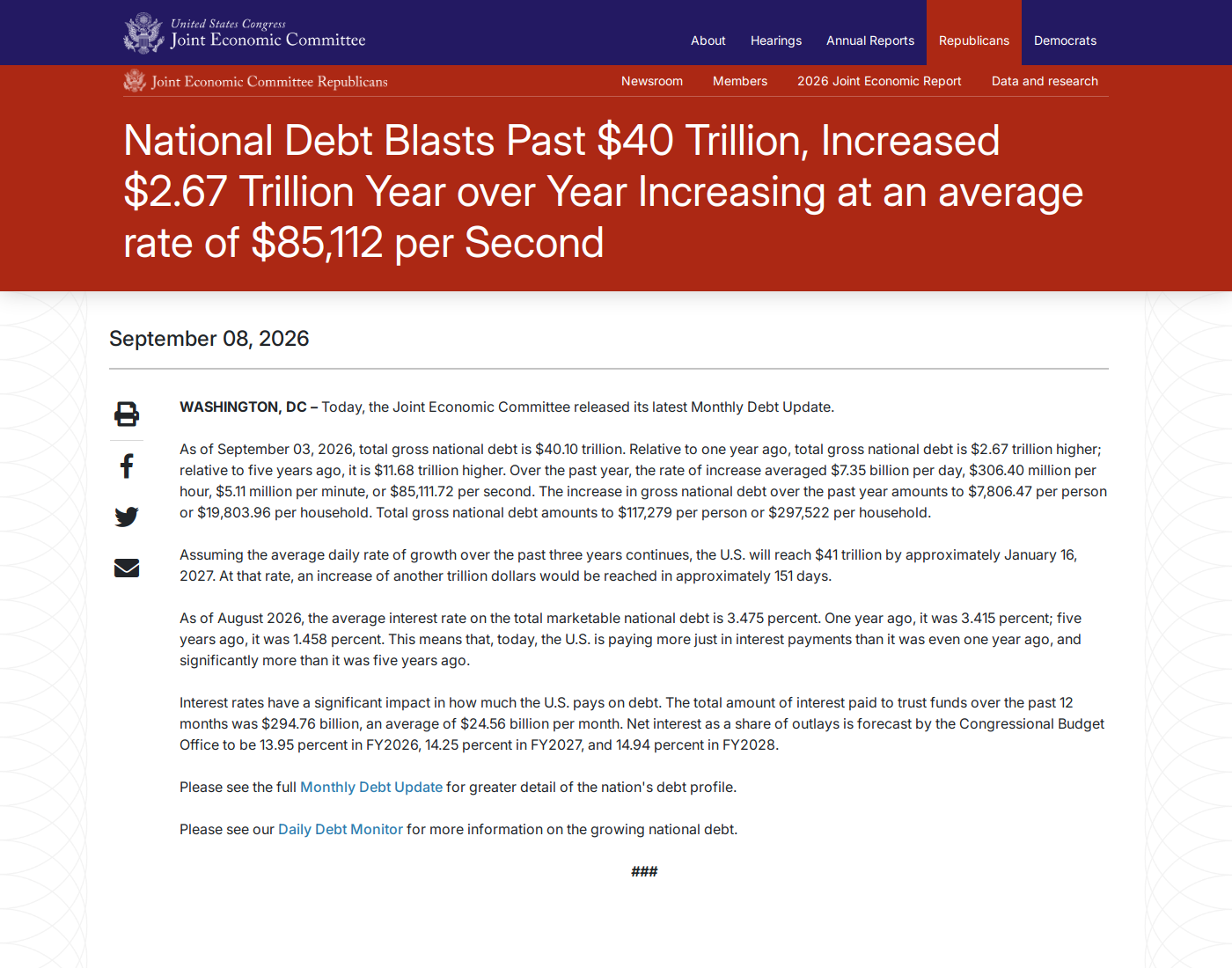
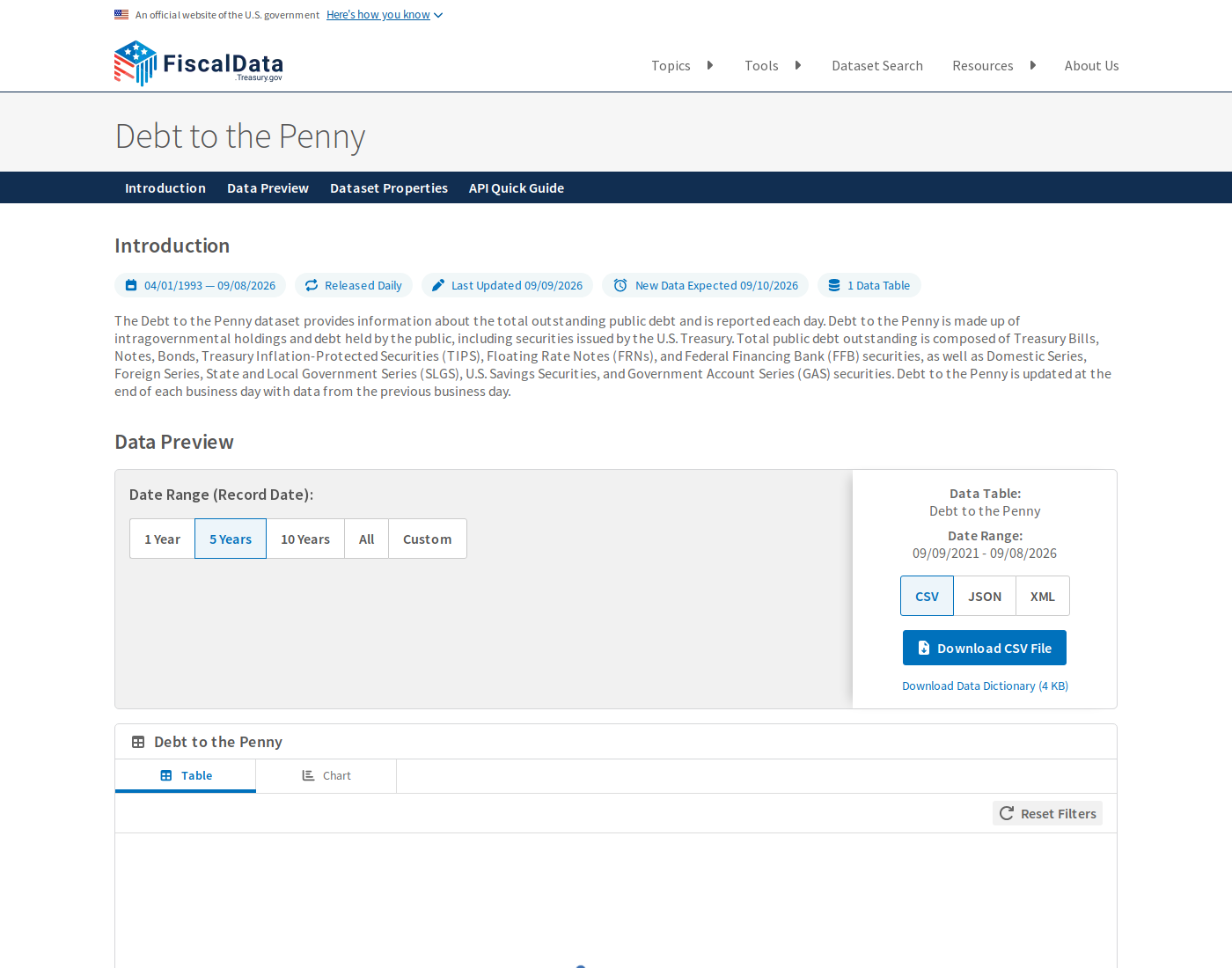
Interest expense is large; the average rate on marketable debt was 3.475% in August 2026 per the same JEC note. Long-end Treasuries need a term premium when issuance is heavy. “Inflate the debt away” stays a live political temptation — which is exactly why long nominal bonds are not a free lunch “safety” sleeve here.
4. Inflation above 2% for years
Kobeissi’s wording is “above 2% for 60 consecutive months.” Treat that as their framing of a long stretch above the Fed’s 2% target. The measurable snapshot that matters for the next Fed meeting:
- July 2026 CPI: +3.4% YoY headline; core +2.5% (CNBC summary of BLS; energy +14.7% YoY in that release)
- Headline has been sticky because of energy; core has come in better. That split is why the Fed is not cutting freely.
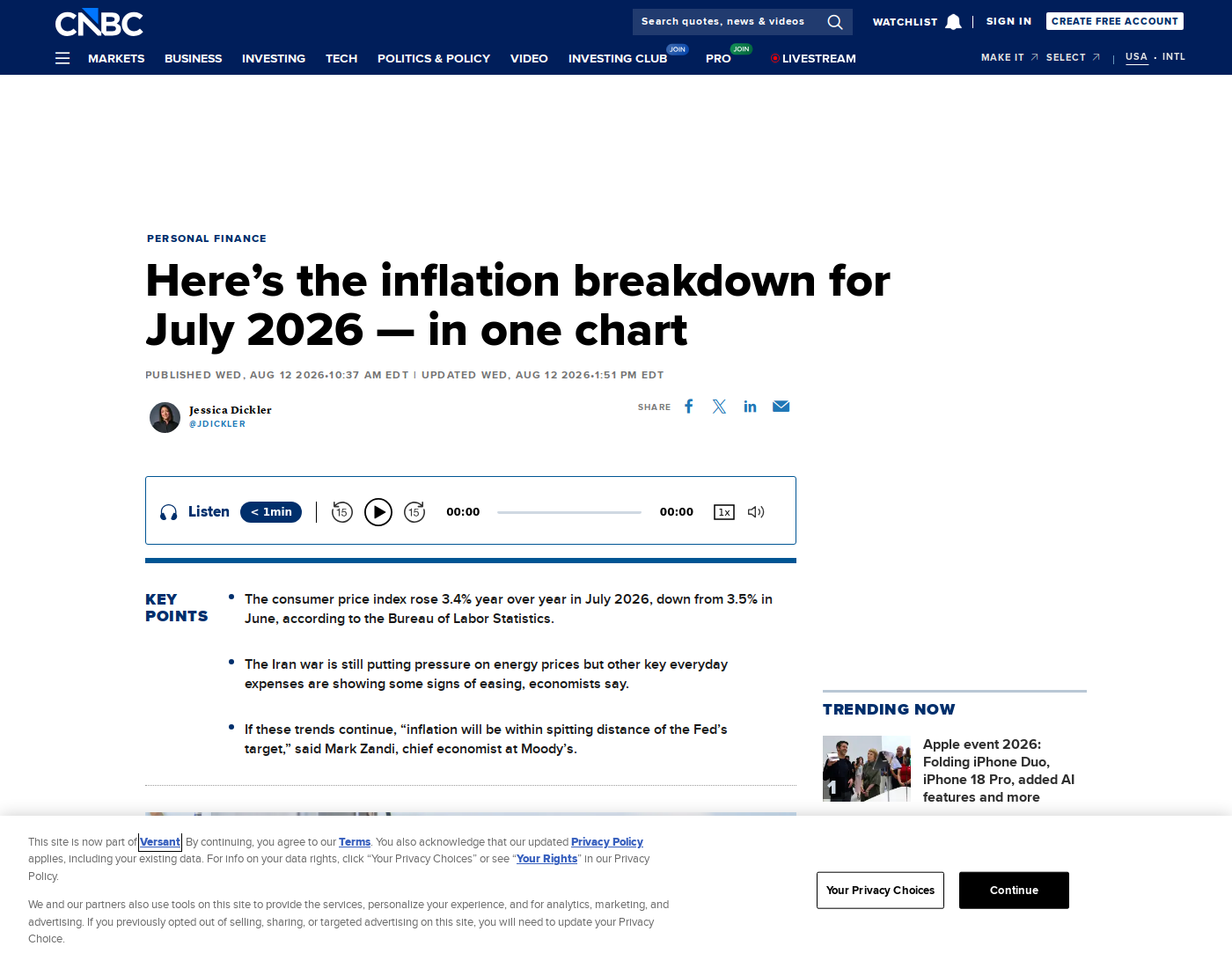
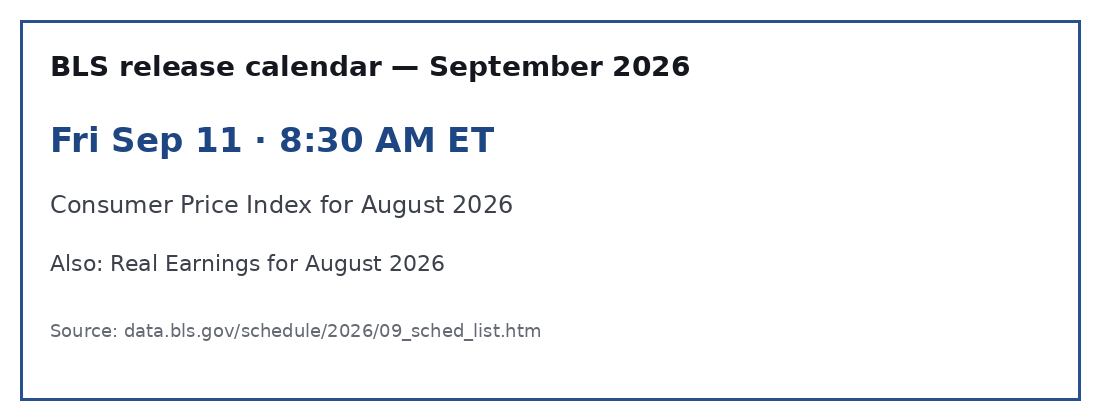
Next print: BLS releases August 2026 CPI on Friday, September 11, 2026 at 8:30 a.m. ET (BLS September schedule).
5. AI boom
This one is real in the cash-flow and capex data, not just slides: large tech spend, margin expansion where the models land, and huge incremental demand for power, chips, copper, and grids. That is both a growth engine and an inflation channel (electricity, equipment, construction).
So “AI” in a portfolio sense is not one ticker. The crowded mega-cap sleeve and the picks-and-shovels layer (power, memory, data-center infrastructure, copper) are different risk budgets.
6. Fed under Kevin Warsh — pressure to cut, inflation still above target
Federal funds target range: 3.50–3.75% (held at the prior meeting; CNBC / Fed coverage). Next FOMC: September 15–16, 2026 (Fed calendar).
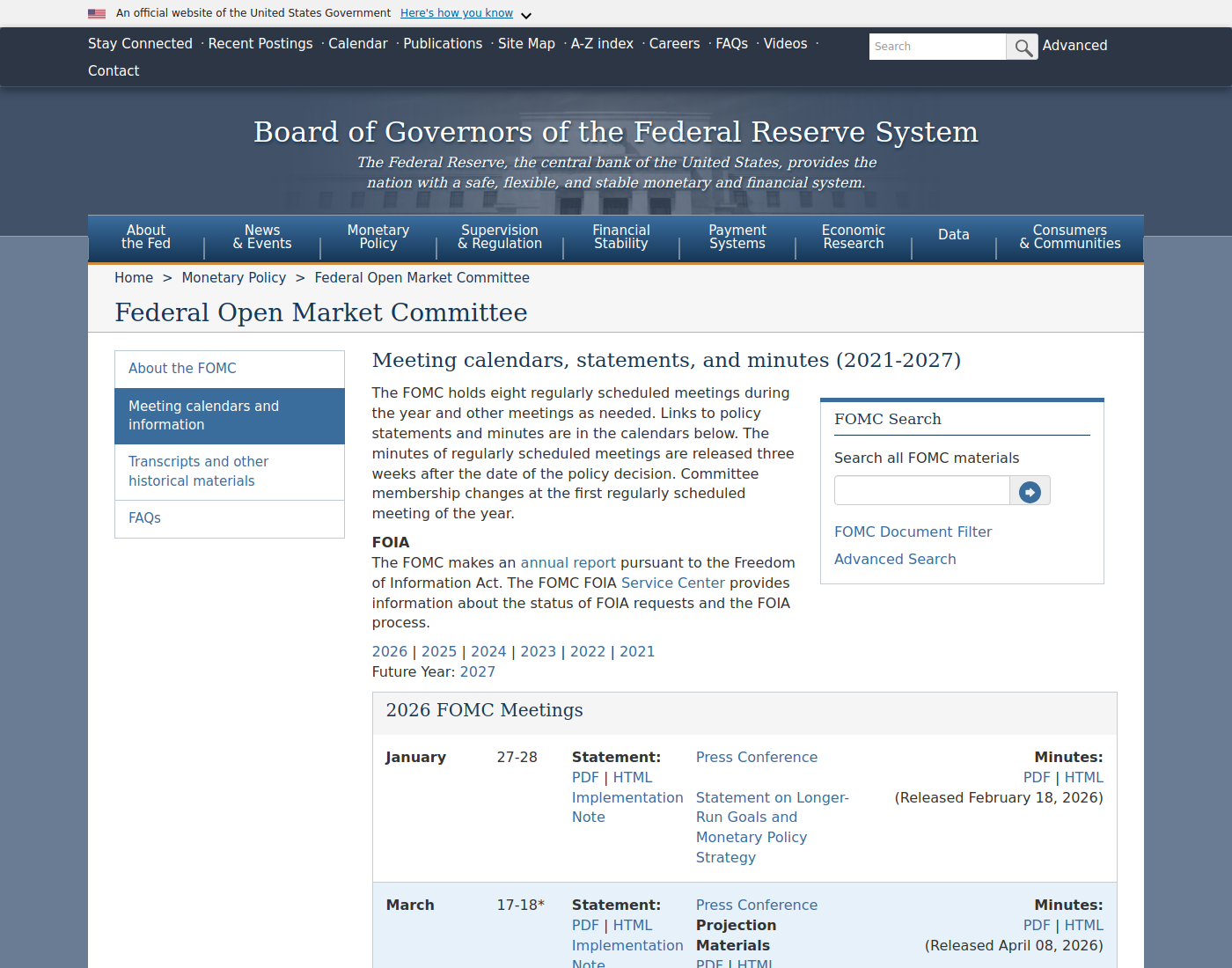
Economists still often lean hold for the rest of 2026 in base cases, but hike risk has risen into this meeting as oil spiked and Warsh has been explicit that price stability comes first (Reuters on Warsh / Jackson Hole framing). Political pressure to cut does not automatically produce cuts.
A coherent way to position (not a trade list)
1. Keep equity exposure — but do not treat “AI” as one ticker
US equities and the AI buildout remain the growth offset to high energy and high rates. Prefer, in spirit:
- Quality cash-flow businesses with pricing power
- The picks-and-shovels layer (power, grids, copper, memory, data-center infrastructure) rather than only the most crowded mega-cap names
- Some energy producers if you believe the geopolitical premium lasts through the midterms
Long-duration, unprofitable growth is the weakest sleeve if rates stay higher-for-longer.
2. Shorten duration — do not hide in long Treasuries
High debt + sticky inflation + possible fiscal impulse is a bad default setup for long nominal bonds. Intermediate Treasuries, high-quality short/medium credit, and TIPS are the more common institutional preference in this mix. Long bonds are a deliberate risk, not a default hedge.
3. Hold explicit inflation and scarcity hedges
Common sleeves when oil shock + AI capex + fiscal noise show up together:
- TIPS
- Gold (fiscal credibility + central-bank demand)
- Energy / broad commodities
- Copper and other power-related metals
- Infrastructure and real assets with inflation-linked cash flows
4. Respect the political calendar
Midterms are the binary for condition #1. A GOP sweep plus actual checks would be risk-on and inflationary (consumer, discretionary, possibly more oil demand). A loss — or a promise that never materializes — removes that impulse and can reprice fiscal premia the other way.
5. Liquidity and optionality still matter
Cash and short-term yields are not zero. In a regime where oil, war headlines, and Fed credibility can move markets in a week, dry powder is a position.
What to avoid as a default
- All-in long-duration Treasuries as “safety”
- Assuming the Fed will cut because the White House wants it
- Assuming $5,000 checks are paid
- Concentrating only in the most expensive AI names while ignoring energy and power bottlenecks
- Ignoring that high oil + high debt can produce stagflation pockets even if AI keeps GDP from collapsing
Simple mental model
Own productivity (AI + quality equities) and own scarcity (energy, power metals, gold, TIPS).
Underweight the assets that lose if inflation and deficits stay messy (long nominal bonds, levered duration-sensitive growth).
Reassess after the September FOMC, August CPI (Sep 11), and clearer midterm polling — not after one viral list.
Prompt (copy into Cursor / Claude)
Use this when you want an agent to stress-test a portfolio or a news list against the same framework — without inventing trades as “advice.”
You are helping me think through macro regime risk. This is educational scenario analysis — not personalized investment advice. Do not recommend specific lot sizes or tell me what to buy for my situation.

Source list (Sep 2026 context):
- Kobeissi Letter six conditions: https://x.com/KobeissiLetter/status/2097887998603907119
  1) Conditional $5k adult “dividend” checks if GOP keeps both chambers
  2) Oil > $100 (Brent)
  3) US debt > $40T
  4) Inflation above Fed 2% target for a long stretch
  5) AI / tech productivity boom
  6) Fed pressured to cut while inflation still above target (Chair Warsh; funds ~3.50–3.75%; FOMC Sep 15–16, 2026)

Verified-ish anchors to prefer over vibes:
- Debt: JEC ~$40.10T as of Sep 3, 2026
- CPI: July 2026 +3.4% YoY headline, core +2.5% (BLS via CNBC)
- Next CPI: Aug 2026 print due Sep 11, 2026 (BLS schedule)
- Oil: Brent > $100 on Sep 9, 2026 (Reuters)
- Checks: conditional; cost ~$1–1.35T IF paid; prior similar pledges largely unpaid

Task:
1) Map each of the six conditions to: growth impulse, inflation impulse, or both.
2) Explain why there is no single “correct” portfolio from this list.
3) Propose a barbell FRAMEWORK (sleeves, not tickers): productivity/AI side vs scarcity/inflation-hedge side; what to underweight if inflation + deficits stay messy.
4) List decision points after Aug CPI and Sep FOMC (what would change the framework).
5) Flag political-calendar scenarios for the $5k checks (paid vs not) without treating them as base case.
6) Cite sources. If a number is uncertain, say so.

Dead ends:
- Do not output a “buy these 8 tickers” list as advice
- Do not assume Fed cuts because politicians demand them
- Do not assume checks are paid
- Do not treat long Treasuries as automatic safety in this regime
Sources (start here)
| Topic | Source |
|---|---|
| The list | Kobeissi Letter on X |
| Debt $40.1T | JEC Monthly Debt Update · Treasury Debt to the Penny |
| Brent > $100 | Reuters, Sep 9, 2026 |
| July CPI | CNBC / BLS summary · BLS CPI releases |
| Aug CPI date | BLS Sep 2026 schedule |
| FOMC | Fed calendars · Reuters on Warsh |
| $5k checks | News9 · InvestingLive |
Markets move. The list is a map of tensions, not a trade ticket. Own productivity, own scarcity, keep powder — and update after CPI and the FOMC, not after the next screenshot on X.
Keep reading
- What I Wish I Would Have Known About Building Financial FreedomAssets vs paycheck thinking.
- Don't Quit Medicine. Build Leverage.Keep the license. Build anyway.
- The stock market is not the best way to build wealthWhy equities alone aren’t the whole plan.
- Pieter Levels cancelled ScrapingBeeCost discipline — different domain, same skepticism of neat narratives.
- We built our own analytics (no Google) — and how to add GA anywayHow Physician Forge tracks humans, bots, and AI referrals on a VPS with SQLite — public Stats walkthrough, the durability prompt that keeps deploys from wiping history, Cursor briefs for non-coders, plus optional Google Analytics.
- Cursor for people who don’t code — download, open a folder, give it a jobA physician-friendly Cursor onboarding: install, open a folder, Agent vs Ask vs Plan, screenshot walkthroughs, and the exact prompts to paste for your first small win.